Google
 

Sunday, September 16, 2007

Hiding the Truth About Losing the War on Cancer

Hiding the Truth About Losing the War on Cancer
by Tony Isaacs

For well over half a century we have been promised by mainstream medicine that a cure or major breakthrough for cancer was just around the corner. Every year we see promising new drugs and therapies announced. Yet every year we also see more people contract cancer and more people die of cancer.

Instead of focusing on natural and safe methods of prevention and treatment, we continue to treat by using surgery, chemotherapy and radiation to cut out, poison out and burn out the symptoms of cancer while leaving the underlying causes untreated - and we continue to largely ignore the role that proper diet, nutrition and lifestyle plays in preventing and helping cure cancer.

Although surgery does have some success against a limited number of cancers, chemo and radiation achieve at best a 3% increase in length of survival and true cures from cancer (meaning that the patient becomes completely cancer free and the cancer never returns). The fact is that for those who are diagnosed with cancer, after the third year the survival rate for those who had no treatment at all increases steadily and for those who had mainstream treatment it decreases steadily.

Sources: Dr. Ralph Moss and Webster Kehr, the "Cancer Tutor"

Despite the dismal record, those in the $300 Billion a year cancer industry appear determined to maintain a stranglehold on treatment. One way they do so is to suppress natural alternatives. Another is to misreport their success rates by altering statistics to make their success appear to be much better than it actually is.

Here are six ways that mainstream medicine misreports their statistics:

1. By re-defining "cure" as "alive five years after diagnosis: instead of using the word's real meaning, which is "cancer-free". Thus a patient could still have cancer the entire five years and die one day after the 5th anniversary date of diagnosis and still be recorded as a cure.

2. By simply omitting certain groups of people, such as African Americans, or by omitting certain types of cancer, such as all lung cancers patients, from their statistical calculations.

3. By including types of cancer that are not life-threatening and are easily curable, such as skin cancers and DCIS.

The statistics most commonly reported include many such easily curable cancers, such as localized cancers of the cervix, non-spreading cancers and melanomas, as well as "cancers" that many feel are not true cancers at all, merely pre-cances. For example, DCIS is a pre-cancerous condition that is 99% curable and makes up 30% of all breast cancers. Deduct that 30% from the breast cancer cure rates and survival statistics and and the figures are much less impressive.

4. By allowing earlier detection to erroneously imply longer survival.

5. By deleting patients from cancer treatment studies who die too soon, even if that is on the 89th day of a 90 day chemotherapy protocol.

6. By using a questionable adjustment called "relative survival rate" where they get to deduct a certain number of cancer victims who statistics say would have died during the five years of other causes such as heart attacks, car wrecks, etc.

Source: Tanya Harter Pierce "Outsmart Your Cancer"

These outrageous "fudges", as Ms. Harter too kindly calls them, have all been incorporated into cancer cure statistics to hide the fact that the war on cancer has been hopelessly lost and wrongly waged. In the opinion of many who are far more knowledgeable and qualified than I am, the so-called War on Cancer is little more than a hoax.

"Everyone should know that most cancer research is largely a fraud and that the major cancer research organisations are derelict in their duties to the people who support them." - Linus Pauling PhD (Two-time Nobel Prize winner).

"The National Anti-Cancer Program is a bunch of sh*t." - James Watson, Nobel Laureate for Medicine in 1962 , joint discoverer of the double helix of DNA, and for two years a member of the US Joint Advisory Committee on Cancer

When it comes to mainstream successes, of the three major mainstream treatment methods, surgery is the only one with respectable success rates and even then it is only successful the vast majority of the time in those who have operable types of cancer that has not yet metastisized at the time of diagnosis - and most cancers are not detected prior to metastisizing.

When it comes to Chemo, in the words of Dr. Ralph Moss:

"Chemo has some success in a few kinds of cancer, but in the conventional cancers which chemotherapy sometimes "works" such as small-cell lung cancers, the actual survival benefit is reckoned in weeks or months, not in years. And during this time, the patient is likely to experience major, even life threatening, side effects from the treatment, so the overall advantage to the patient is moot."

Radiation results are even more dismal. In some studies, patients who opted for radiation have had lower survival rates than those who did not have radiation.

Sources: Tanya Harter Pierce, Dr. Rath Foundation

Another common deception of mainstream medicine is to quote "response rates", which is defined as having a 50% tumor shrinkage for a period of twelve months. It has nothing to do with cure rates or long term survival, but it is the statistic that is often quoted to patient by their oncologists.

Yet another deception is the use of the term "remission" to imply cure, when it is nothing of the sort. As "the Cancer Tutor" Webster Kehr writes in "The War Between Orthodox Medicine and Alternative Medicine"

First of all, the National Cancer Institute defines "remission" as:

"A decrease in or disappearance of signs and symptoms of cancer. In partial remission, some, but not all, signs and symptoms of cancer have disappeared. In complete remission, all signs and symptoms of cancer have disappeared, although cancer still may be in the body." NCI - http://www.nci.nih.gov/dictionary/db_alpha.aspx?expand=R What exactly does this definition mean relative to the three "treatment decision criteria" . . . You, the citizen, are supposed to assume that "remission" means a person is cured of their cancer. But that is not what the definition states. It states there is an absence of "signs and symptoms." So is there a correlation between the absence of "signs and symptoms" and the three treatment decision criteria above?

Generally, the determination of remission is based on a reduction in the size of the tumor or in the change of some tumor marker. These things may indicate the number of cancer cells in the body, but they are very, very crude estimates of the number of cancer cells in the body. These numbers also do not measure the pain and suffering of the patient (i.e. the quality of life) or the status of the immunity system, which is very, very important if all of the cancer cells have not been killed.

And then there is what is likely the greatest mainstream deception of all: the millions of people who are diagnosed with cancer, but actually die from the damages done by chemotherapy and radiation, most frequently major organ failure. All of those deaths are recorded as due to cancer. Though that does not bolster the mainstream cancer treatment success rates, it helps hide the dangers and deaths due to mainstream treatments.

It should be plain that the war against cancer is not being won - and to continue to claim otherwise after over half a century begs the question of why such obviously false and misleading claims and statistics. In this respect, one is reminded of the Vietnam War, where we were told that we won every battle and that we killed many more of the enemy in every skirmish. And yet the war was a failure and in the end we admitted it, stopped deceiving the public, and moved on to a different approach to stop the needless loss of lives. Today it appears that the war with Iraq will ultimately end the same way.

The war against cancer has lasted much longer and we have lost millions and millions of lives. After over half a century of failure, one has to ask how long will it take to admit it, stop deceiving the public, and move on to a different approach to stop the needless loss of lives?
Smoking affects children's genes

Smoking affects children's genes

Charles Darwin’s theories of evolution may have to be modified as a result of new research showing that smoking causes genetic changes that can be passed on to children, tending to make them obese. The study is thought to be the first to show clearly that people’s lifestyle and environment can alter genes in ways that can be inherited by subsequent generations. Standard evolutionary theory derived from Darwin maintains that such changes take place by chance over numerous generations.
Marcus Pembrey, professor of paediatric genetics at the Institute of Child Health at University College London, who carried out the research, said the findings indicated a new mechanism of inheritance. “It seems that the way we live our lives can affect future generations,” he said. “It is not just our own genes that we affect by choices like smoking or diet. It is those of our descendants, too.” In his research Pembrey used a database assembled as part of Bristol University’s ‘Children of the 90s’ project, which has collected data on more than 10,000 youngsters born during 1991-92.

Of those, about 5,000 had fathers who smoked. Pembrey identified 166 of them who said they had started smoking before the age of 11. He then studied the growth of these men’s offspring. Pembrey said: “The sons of the early smokers were significantly bigger than other children. The daughters were unaffected.” Pembrey believes the men’s exposure to smoke so early in life did not damage their DNA directly. Instead it affected the mechanisms controlling which genes are active and which are inert. It has long been known that lifestyle and environment can have their own additional impact on the way genes are switched on and off.
What has never been accepted - and what Pembrey is now proposing - is that such changes can be inherited. Such findings cannot be explained by modern theories of evolution based on Darwin’s theories. Darwin suggested that evolution occurs through random mutations; those which make an organism better equipped for life survive while others vanish. Pembrey told a BBC Horizon programme: “If early smoking can affect children conceived so many years later, then this is powerful evidence for the importance of high-qualit health, lifestyle and nutrition throughout childhood.”

Saturday, September 15, 2007

Sleep Apnea And Children - A Troubling Problem

Sleep Apnea And Children - A Troubling Problem
by John Spencer

Believe it or not, sleep apnea and children are related. In fact, sleep apnea and everyone are related! The sleeping disorder is one of the few afflictions that know no age, race or gender. Equally affecting all, sleep apnea can kill you if left untreated. Sound extreme? I thought so, too, until I did a little research. It turns out, sleep apnea increases pulmonary pressures on the right side of the heart. This has the potential to cause a severe form of congestive heart failure. Who knew that sleeping could cause a heart attack? Certainly not me, until last week.

Sleep apnea and children were particularly saddening to learn about. To think that small children are having trouble breathing at night breaks my heart. Literally, those who have sleep apnea go without breathing for ten seconds or more in between snores. Usually, they end up audibly gasping for breath. After just one night of sleeping this way, the kids experience a blood oxygen desaturation of at least three or four percent. While this may not sound like much, it really makes a difference in one's overall health. When you take a look at some of the symptoms and side effects of sleep apnea, they're staggering.

Looking at all of the different ways that the sleeping disorder can affect the young, it's easy to see that sleep apnea and children really don't mix. After awhile, people who have it can begin to suffer from depression, anxiety attacks, paralyzing headaches and forgetfulness. Additionally, many young children who have sleep apnea are also diagnosed with failure to thrive. This is a direct result of food being tasteless and even uncomfortable to eat. Also, their physical stature can be effected. In many cases, children with sleep apnea grow up to have short and heavy necks.

Monday, September 10, 2007

Tips To Manage Adhd In Adults

Tips To Manage Adhd In Adults
by Ashton Renderly

ADHD in adults is usually better managed with acceptance, understanding and appropriate education as to what to do and what not to do when treating ADHD. The following tips will hopefully help in making ADHD less of a problem but more of a challenge that - with support and awareness - could easily be overcome.

First things first, learn adhd

The best weapon against adhd is education. A better informed adhd person is a person that well understands what adhd is and what are the possible treatments available for adhd.

Read up on adhd. Better yet, ask around those who have worked with adhd or those who may have adhd themselves. It would be best to converse with professionals. You yourself may be able to design a treatment that suits your personal needs.

It is also best that you help involve other people especially those you live or interact with constantly. Once they understand the adhd concept, they will also find it easier to know how to relate with you as well.

Learn to listen

It would help adhd sufferers if they listen to the feedback they receive from the persons they trust. It has been known that children and adult suffers of adhd observe themselves very poorly that they are usually in self-denial.

Join adhd support groups

Believe it or not, most of the information that pertains to adhd are not usually found in books but are actually stored inside the minds of adhd sufferers. When adhd groups come together, their experiences could be considered as valid information that could help each adhd adult.

Do not be afraid to be yourself

Adhd sufferers would feel happy to know that they need not feel imprisoned by careers or any other traditional manners of living with this disorder. As much as possible, try to allow yourself the freedom to just be your honest self. It would do you good to surrender whatever is the image of yourself you think you "expect' or should just be. Be it the model employee, or organized corporate executive. Let you be the you in which you really are.

Do not hate yourself

Try to remember that adhd is primarily caused by genetics and not by any failure in your part because you are particularly weak in will or because of a moral flaw. Having adhd does not also mean that your character needs to be improved because it is weak. It does not also mean that you are immature.

Adhd is a condition that is neuropsychiatric in origin. Accepting this fact and acknowledging this issue is a major and first step to the process of healing.

Make structure your friend

Treatment of adhd is helped more by establishing a structured environment. This is because an environment that is structured - like a slide bobsled that helps keep the ball from going off the track - helps keep the adhd adult similarly on track.

It would also help if there are color-coded files, schedules, texts or memoranda as most adhd people are oriented visually and arresting.

Expect the inevitable

It would be best to anticipate a possible success and failure of a project, a relationship or obligation. Acknowledging the good and bad of an incident is a good way to help face challenges whatever they may be.

All in all, adhd is totally treatable once adhd adult sufferers acknowledge that they have adhd and it is possible to live with it but not to totally surrender to it.

The Morality Of Child Labor

The Morality Of Child Labor
by Sam Vaknin

How to cope with your abuser?

Sometimes it looks hopeless. From the comfort of their plush offices and five to six figure salaries, self-appointed NGO's often denounce child labor as their employees rush from one five star hotel to another, $3000 subnotebooks and PDA's in hand. The hairsplitting distinction made by the ILO between "child work" and "child labor" conveniently targets impoverished countries while letting its budget contributors - the developed ones - off-the-hook.

Reports regarding child labor surface periodically. Children crawling in mines, faces ashen, body deformed. The agile fingers of famished infants weaving soccer balls for their more privileged counterparts in the USA. Tiny figures huddled in sweatshops, toiling in unspeakable conditions. It is all heart-rending and it gave rise to a veritable not-so-cottage industry of activists, commentators, legal eagles, scholars, and opportunistically sympathetic politicians.

Ask the denizens of Thailand, sub-Saharan Africa, Brazil, or Morocco and they will tell you how they regard this altruistic hyperactivity - with suspicion and resentment. Underneath the compelling arguments lurks an agenda of trade protectionism, they wholeheartedly believe. Stringent - and expensive - labor and environmental provisions in international treaties may well be a ploy to fend off imports based on cheap labor and the competition they wreak on well-ensconced domestic industries and their political stooges.

This is especially galling since the sanctimonious West has amassed its wealth on the broken backs of slaves and kids. The 1900 census in the USA found that 18 percent of all children - almost two million in all - were gainfully employed. The Supreme Court ruled unconstitutional laws banning child labor as late as 1916. This decision was overturned only in 1941.

The GAO published a report last week in which it criticized the Labor Department for paying insufficient attention to working conditions in manufacturing and mining in the USA, where many children are still employed. The Bureau of Labor Statistics pegs the number of working children between the ages of 15-17 in the USA at 3.7 million. One in 16 of these worked in factories and construction. More than 600 teens died of work-related accidents in the last ten years.

Child labor - let alone child prostitution, child soldiers, and child slavery - are phenomena best avoided. But they cannot and should not be tackled in isolation. Nor should underage labor be subjected to blanket castigation. Working in the gold mines or fisheries of the Philippines is hardly comparable to waiting on tables in a Nigerian or, for that matter, American restaurant.

There are gradations and hues of child labor. That children should not be exposed to hazardous conditions, long working hours, used as means of payment, physically punished, or serve as sex slaves is commonly agreed. That they should not help their parents plant and harvest may be more debatable.

As Miriam Wasserman observes in "Eliminating Child Labor", published in the Federal Bank of Boston's "Regional Review", second quarter of 2000, it depends on "family income, education policy, production technologies, and cultural norms." About a quarter of children under-14 throughout the world are regular workers. This statistic masks vast disparities between regions like Africa (42 percent) and Latin America (17 percent).

In many impoverished locales, child labor is all that stands between the family unit and all-pervasive, life threatening, destitution. Child labor declines markedly as income per capita grows. To deprive these bread-earners of the opportunity to lift themselves and their families incrementally above malnutrition, disease, and famine - is an apex of immoral hypocrisy.

Quoted by "The Economist", a representative of the much decried Ecuador Banana Growers Association and Ecuador's Labor Minister, summed up the dilemma neatly: "Just because they are under age doesn't mean we should reject them, they have a right to survive. You can't just say they can't work, you have to provide alternatives."

Regrettably, the debate is so laden with emotions and self-serving arguments that the facts are often overlooked.

The outcry against soccer balls stitched by children in Pakistan led to the relocation of workshops ran by Nike and Reebok. Thousands lost their jobs, including countless women and 7000 of their progeny. The average family income - anyhow meager - fell by 20 percent. Economists Drusilla Brown, Alan Deardorif, and Robert Stern observe wryly:

"While Baden Sports can quite credibly claim that their soccer balls are not sewn by children, the relocation of their production facility undoubtedly did nothing for their former child workers and their families."

Such examples abound. Manufacturers - fearing legal reprisals and "reputation risks" (naming-and-shaming by overzealous NGO's) - engage in preemptive sacking. German garment workshops fired 50,000 children in Bangladesh in 1993 in anticipation of the American never-legislated Child Labor Deterrence Act.

Quoted by Wasserstein, former Secretary of Labor, Robert Reich, notes:

"Stopping child labor without doing anything else could leave children worse off. If they are working out of necessity, as most are, stopping them could force them into prostitution or other employment with greater personal dangers. The most important thing is that they be in school and receive the education to help them leave poverty."

Contrary to hype, three quarters of all children work in agriculture and with their families. Less than 1 percent work in mining and another 2 percent in construction. Most of the rest work in retail outlets and services, including "personal services" - a euphemism for prostitution. UNICEF and the ILO are in the throes of establishing school networks for child laborers and providing their parents with alternative employment.

But this is a drop in the sea of neglect. Poor countries rarely proffer education on a regular basis to more than two thirds of their eligible school-age children. This is especially true in rural areas where child labor is a widespread blight. Education - especially for women - is considered an unaffordable luxury by many hard-pressed parents. In many cultures, work is still considered to be indispensable in shaping the child's morality and strength of character and in teaching him or her a trade.

"The Economist" elaborates:

"In Africa children are generally treated as mini-adults; from an early age every child will have tasks to perform in the home, such as sweeping or fetching water. It is also common to see children working in shops or on the streets. Poor families will often send a child to a richer relation as a housemaid or houseboy, in the hope that he will get an education."

A solution recently gaining steam is to provide families in poor countries with access to loans secured by the future earnings of their educated offspring. The idea - first proposed by Jean-Marie Baland of the University of Namur and James A. Robinson of the University of California at Berkeley - has now permeated the mainstream.

Even the World Bank has contributed a few studies, notably, in June, "Child Labor: The Role of Income Variability and Access to Credit Across Countries" authored by Rajeev Dehejia of the NBER and Roberta Gatti of the Bank's Development Research Group.

Abusive child labor is abhorrent and should be banned and eradicated. All other forms should be phased out gradually. Developing countries already produce millions of unemployable graduates a year - 100,000 in Morocco alone. Unemployment is rife and reaches, in certain countries - such as Macedonia - more than one third of the workforce. Children at work may be harshly treated by their supervisors but at least they are kept off the far more menacing streets. Some kids even end up with a skill and are rendered employable.

Sunday, September 2, 2007

Understanding Anemia -- the Basics

What Is Anemia?

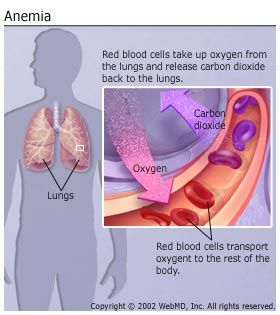
gas exchange in the lungsAnemia is a condition that develops when your blood is deficient in healthy red blood cells, which are the main transporter of oxygen to organs. If red blood cells are also deficient in hemoglobin, then your body isn't getting enough iron. Symptoms of anemia -- like fatigue -- occur because organs aren't getting enough oxygen.

Anemia is the most common blood condition in the U.S affecting about 3.5 million Americans. Women and people with chronic diseases are at increased risk of the condition. Important factors to remember are:

DOCTOR recommended reading

Anemia Symptoms

What Are the Symptoms of Anemia?

The symptoms of anemia will vary according to the type of anemia, the underlying cause and your underlying health problems. Anemia may be associated with other medical conditions such as hemorrhage, ulcers, menstrual problems or cancer -- and specific symptoms of those conditions may be noticed first.

Symptoms common to many types of anemia are:

The body also has a remarkable ability to compensate for early anemia. If your anemia is mild or developed over a long period of time, you may not notice any symptoms.

  • Easy fatigue and loss of energy.
  • Unusually rapid heart beat, particularly with exercise.
  • Shortness of breath and headache, particularly with exercise.
  • Difficulty concentrating.

Read more about Anemia Symptoms

  • Certain forms of anemia are hereditary and infants may be affected from the time of birth.
  • Women in the childbearing years are particularly susceptible to a form of anemia called iron-deficiency anemia because of the blood loss from menstruation and the increased blood supply demands during pregnancy.
  • Seniors also may have a greater risk of developing anemia because of poor diet and other medical conditions.

There are many types of anemia. All are very different in their causes and treatments. Iron-deficiency anemia, the most common type, is very treatable with diet changes and iron supplements. Some forms of anemia -- like the anemia that develops during pregnancy -- are even considered normal. However, some types of anemia may present lifelong health problems.

What Causes Anemia?

There are more than 400 types of anemia, which can be broadly classified into three categories:

  • anemia caused by blood loss.
  • anemia caused by decreased or faulty red blood cell production.
  • anemia caused by destruction of red blood cells.

Anemia caused by blood loss. Red blood cells can be lost through bleeding, which can occur slowly over a long period of time, and can often go undetected. This kind of chronic bleeding commonly results from gastrointestinal conditions such as ulcers, hemorrhoids, gastritis (inflammation of the stomach) and cancer. Chronic bleeding can also occur with use of nonsteroidal anti-inflammatory drugs (NSAIDS) such as aspirin or Motrin. Menstruation and childbirth often cause significant blood loss in women, especially if menstrual bleeding is excessive and if there are multiple pregnancies.

Anemia caused by decreased or faulty red blood cell production. In sickle cell anemia, an inherited disorder that affects African-Americans, red blood cells become crescent-shaped (hence the name, "sickle cell") because of a genetic defect. They break down rapidly, so oxygen does not get to the body's organs, causing anemia. The crescent-shaped red blood cells also get stuck in tiny blood vessels, causing pain.

Anemia caused by decreased red blood cell production. Iron deficiency anemia occurs because of a lack of the mineral iron in the body. Your bone marrow (in the center of the bone) needs iron to make hemoglobin, the part of the red blood cell that transports oxygen to the body's organs. Without adequate iron, your body cannot produce enough hemoglobin for red blood cells. The result is iron deficiency anemia.

An iron-poor diet can cause iron-deficiency anemia, especially in infants, children, teens and vegetarians. The metabolic demands of pregnancy and breastfeeding can deplete a woman's iron stores, as can menstruation. Both frequent blood donation and endurance training can also run down the body's iron stores. Some people have enough iron in their diets, but cannot absorb the iron because of digestive conditions such as Crohn's disease or because part of their stomach or small intestine has been surgically removed. Certain drugs, foods and caffeinated drinks can also interfere with iron absorption.

Vitamin B-12 and folate deficiency anemia (megaloblastic anemia) is another anemia caused by vitamin deficiency. The body needs vitamin B-12 and folate to manufacture red blood cells, and will develop megaloblastic anemia if one or both of these substances is deficient.

Some people have a condition that prevents the body from absorbing vitamin B-12 from food, leading to what's called pernicious anemia. Poor vitamin B-12 absorption may also result from Crohn's disease, an intestinal parasite infection, surgical removal of part of the stomach or intestine, and infection with HIV. People who eat little or no meat -- vegetarians or vegans -- may not have enough vitamin B-12 in their diets.

A folate deficiency can develop from eating too few folate-containing foods -- such as vegetables -- or overcooking vegetables. Deficiency may also occur if your body needs extra folate (for example, during pregnancy), if you take certain medications, or if you abuse alcohol. Two intestinal diseases -- tropical sprue and gluten-sensitive enteropathy (celiac disease) -- can deplete your body of both vitamin B-12 and folate. During early pregnancy, sufficient folic acid can prevent the fetus from developing neural tube defects such as spina bifida.

Anemia caused by problems of the bone marrow and stem cells. Sometimes the body can't produce enough red blood cells because of a problem with the primitive cells (that can develop into red cells) in the bone marrow called stem cells. These critical cells may decrease in number, may carry defects, or may be replaced by other cells, such as metastatic cancer cells.

Aplastic anemia is a very serious condition that occurs when there's a marked reduction in the number of stem cells or absence of these cells. Aplastic anemia can be inherited, can occur without apparent cause, or can occur when the bone marrow is injured by medications, radiation, chemotherapy or infection.

Thalassemia is an inherited anemia that occurs when the red cells can't mature and grow properly. Thalassemia is an inherited condition that typically affects people of Mediterranean, African, Middle Eastern, and Southeast Asian descent. This condition can range in severity from mild to life-threatening; the most severe form is called Cooley's anemia.

Lead is toxic to the bone marrow, and lead exposure can lead to anemia. Lead poisoning occurs in adults from work-related exposure and in children who eat paint chips. Improperly glazed pottery can also taint food and liquids with lead.

Anemia associated with other conditions. In advanced kidney disease and hypothroidism the body does not produce adequate hormones necessary for red blood cell production. Other chronic diseases -- such as autoimmune disorders, such as lupus or rheumatoid arthritis, cancer, and infection -- can also reduce red blood cell production.

Anemia caused by premature destruction of red blood cells. When red blood cells are fragile and cannot withstand the routine stress of the circulatory system, they may rupture prematurely, causing hemolytic anemia. Hemolytic anemia can be present at birth or develop later. Several inherited conditions, such as sickle cell anemia, can cause these defective red blood cells. Some hereditary conditions that decrease cell production, such as thalassemia, also produce fragile cells.

Hemolytic anemia may occur spontaneously or can be triggered by stressors such as infections, drugs, snake or spider venom, or certain foods. Toxins from advanced liver or kidney disease can also shorten the life of red blood cells.

The immune system may inappropriately attack red blood cells that it perceives as foreign, leading to anemia. When a pregnant woman's immune system targets her baby's red blood cells, the baby develops a specific type of anemia called hemolytic disease of the newborn.

Vascular grafts, prosthetic heart valves, tumors, severe burns, chemical exposure, severe hypertension, and clotting disorders can all damage normal red blood cells and mark them for early destruction. In rare cases, an enlarged spleen can trap red blood cells and destroy them before their circulating time is up.

Immunization Rates High for U.S. Kids

There's Still Room for Improvement, Especially for Teens, Says CDC

Aug. 30, 2007 -- The CDC today reported that U.S. immunization rates for young kids remain at or above record highs, but teens need to get up to speed on their vaccinations.

"We're doing well in the childhood program but we've still got a ways to go with adolescents," Melinda Wharton, MD, MPH, deputy director of the CDC's National Center for Immunizations and Respiratory Diseases, said at a news conference.

The CDC's latest immunization statistics report covers 2006 vaccinations for kids aged 19-35 months and teens aged 13-17.

The report shows that in 2006, more than three-quarters -- 77% -- of U.S. children aged 19-35 months in 2006 got all of the recommended doses of six childhood vaccines that target 10 diseases.

Those children got four doses of the diphtheria, tetanus, pertussis (whooping cough) vaccine; three doses of the polio vaccine; one or more doses of the measles, mumps, and rubella vaccine; three doses of the Haemophilus influenzae type b (Hib) vaccine; three doses of the hepatitis B vaccine; and one or more doses of the varicella (chickenpox) vaccine.

Kids' Immunization Rates Steady

The percentage of children aged 19-35 months who got all recommended doses of those six vaccines is similar to the 2005 percentage.

But that percentage is still below the government's 2010 goal to have at least 90% of U.S. kids in that group get all recommended doses of their vaccines.

Children's immunization rates varied among states. Here are the top five states, along with the percentage of children aged 19-35 months who got all recommended doses of their vaccines:

  1. Massachusetts: 83.6%
  2. Connecticut: 82%
  3. North Carolina: 81.5%
  4. Georgia: 81.4%
  5. Pennsylvania: 80.8%

The five states at the bottom of the immunization list are:

  1. West Virginia: 68.4%
  2. Alaska: 67.3%
  3. Montana: 65.6%
  4. Wyoming: 63.5%
  5. Nebraska: 59.5%

Among children aged 19-35 months, nearly 78% of whites had gotten the complete vaccination series, compared with about 74% of African-American children. That gap is tied to socioeconomic status, says Wharton.

The figures are based on nationwide telephone interviews with the parents of more than 21,000 U.S. children aged 19-35 months.

Teen Vaccines

For the first time, the CDC also interviewed the parents of more than 2,800 teens aged 13-17. Those interviews show that some teens aren't up to date on their vaccinations.

For instance, the government wants at least 90% of teens aged 13-15 to get the recommended doses of the hepatitis B vaccine and the measles, mumps, and rubella vaccine.

In 2006, between 84% and 88% of teens in that age range had gotten the recommended doses of those vaccines.

But teens were especially behind on newer vaccines. For instance, only about 12% of 13-17-year-olds had received the new meningococcal conjugate vaccine and only about 11% had gotten the combined tetanus, diphtheria, and whooping cough vaccine.

The CDC's immunization figures appear in tomorrow's edition of the CDC's Morbidity and Mortality Weekly Report.

Movement and Exercise During Treatment

While starting a serious exercise program during cancer treatment is usually not a good idea, maintaining energy for your current daily activity level is important as is regaining any lost strength.

As you considered exercise programs, keep the following in mind: Your physician can help you determine what activity level is most appropriate. While exercising, be sure to drink plenty of water—staying well hydrated is important to overall health but even more critical during treatment. Listen to your body and don’t over exert yourself.

Benefits of Exercise Often Include:
Stress reduction,
Improved sleep,
Maintenance or strengthening of cardiovascular system,
Enhanced flexibility and range of motion,
Reduced fatigue,
Relaxation, and
Enhanced self confidence and a feeling of wellness.

You may not realize it, but even light to moderate walking can help increase energy levels and boost self esteem. As well, many patients find that exercise helps reduce feelings of anxiety and depression. Be sure to inform your healthcare provider and start slowly.

Simple Ways to Make Movement Part of Your Day:
Make the most of your daily activities by incorporating exercise.
Take the stairs instead of the elevator.
Park farther away.
Go down every aisle in the grocery store—whether you need to or not!
Stroll around places like malls where you’ll enjoy a controlled environment, people, and plenty of places to rest when you’re tire.
Try exercising in water. Activities like swimming water aerobics are gentle on your joints and you won’t become over-heated. (Remember to use sunscreen if your pool is outside.)
Try Tai Chi, Qi Gong, or yoga. These centuries-old forms of exercise incorporate rhythmic breathing and relaxation techniques with gentle movements.
Gardening can be done with light or moderate movement. Once again, protect yourself from potential sunburn and insect bites.
Find an activity that you enjoy and look forward to doing.

Six Tips for Dealing with Anemia

Anemia, a common condition among cancer patients, is an inadequate supply of red blood cells that results in a decrease in the oxygen-carrying capacity of the blood. Chemotherapy, radiation therapy, and blood loss during surgery are all common causes of anemia in cancer patients. Anemia is an important consideration because it may cause unwanted symptoms, such as fatigue, tiredness, or shortness of breath and may exacerbate or cause other medical problems, such as a heart condition. Furthermore, severe anemia may cause a delay in cancer treatment. If you do experience anemia during cancer treatment, there are several steps you can take to control symptoms and lessen their impact on your treatment schedule and quality of life.

The following tips will help you handle the effects of anemia:
If you experience any symptoms of anemia (such as fatigue, tiredness, or shortness of breath), tell your healthcare team immediately.
Eat a well balanced diet and drink plenty of fluids.
Get adequate rest.
Prioritize your activities so that you can participate in those that are most important and require more energy when you are feeling your best. Low-priority activities can be put off until you feel stronger.
Let friends and family help you with errands and regular chores so that you can conserve your energy.
To prevent dizziness, get up slowly from a sitting position; when you are lying down, sit up slowly before standing.
Consult your doctor about the risks and benefits of treatment for anemia with erythropoietin, a blood cell growth factor that increases red blood cell production. Commercially available forms of erythropoietin include epoetin alfa (Epogen® or Procrit®) and darbepoetin alfa (Aranesp®), a newer and longer acting form of erythropoietin.

History of the Uses of Asbestos

As far back as 2500, BC, asbestos was first recorded to be in use in Finland. There it was apparently mixed with clay to create ceramic pots and utensils. In ancient Greece, it was first mentioned in a book written by Theophrastus, titled, ‘On Stones.’ In this text, the author described a mineral that looked like ‘rotting wood’ that did not burn when doused with oil and set on fire.

The Greeks used to make common lamp wicks and other fireproof products from asbestos because of its fire retardant abilities. In fact the word we use today, asbestos, comes from the Greek word, asbestinon, which means unquenchable. It’s mentioned in Pliny’s work Natural History around 60 A.D.

We find asbestos use in the medieval ages. It was used in the padding of the medieval armor. Throughout history, it’s been used for various products but it only found widespread use in the 1800s. The first patent for an asbestos product was issued in 1828. It was for a special lining of steam train engines. In 1868, a patent for a roofing material containing asbestos was issued. This roofing material was highly regarded for its durability and fire resistance.

Around this same time, large deposits of asbestos were discovered in Quebec, Canada. This discovery jumpstarted the development of many asbestos products. It wasn’t long before asbestos could be found in: gaskets, fireproof safes, bearings, electrical wiring insulation, building materials, and even children’s toys.

By the 1900s many of the technological advances were made by the addition of asbestos. Plastics now contained asbestos fibers to increase their heat resistance. The automotive industry embraced asbestos use and soon it was found in tires, brakes and clutch linings.

At the same time, asbestos became commonplace in the building industry with roofing tiles starting the trend. At that time, asbestos could be found in plumbing pipes, textured paint, vinyl tiles, ceiling tiles and insulation.

This material is still used today for very specialized tasks. Its primary use is in the shielding for the space shuttle and in the insulation for the solid fuel boosters. This is one of only a couple remaining legal uses of asbestos in the US.

Asbestos Industry

Where does asbestos come from?

Asbestos is a naturally substance from metamorphic rocks and deposits of it can be found in most countries in the world. It is still mined today in the former Soviet Union, Canada (white asbestos), South Africa (brown asbestos), and Australia (blue asbestos). Many countries, including the United States, have banned asbestos mining due to the extreme hazards.
How is it processed?

Asbestos is mined usually using the opencast method. The raw material is coarse and fibrous, looking very much like old wood. This material is processed into fluffy fibers. These fibers are graded to determine its selling price. All six kinds of asbestos, and chrysolite, are classed as cancer causing agents or carcinogens. Actinolite, amosite, anthophyllite, crocidolite, termolite are rigid, strong and have thick fibers, which can easily penetrate the body tissues, leading to scarring, tumors or cancer. The only other kind, chrysolite, is made of fibers that can be easily spun and woven into cloth, making it the most desired and the most expensive. Only a small percentage, less than 10% of all chrysolite fibers are long enough to spin and weave into cloth.
How is asbestos shipped, delivered and sold?

Due to its hazardous nature, strict guidelines must be followed for safe shipping. All personnel handling the material should wear personal protective gear including coveralls, eye protection, respirators, gloves and shoe covers and undergo decontamination after handling the material. Their gear needs to be inspected daily and if found damaged, should be disposed of properly. If the damage occurs within or immediately following the containment area, the incident must be reported immediately.

The asbestos should be in airtight containers and clearly marked as being hazardous. On the manifest, the item should be clearly labeled as asbestos so that the shipping workers handle it correctly.

Treatment by Stage

In order to make the best decision, the medical team will take into account the age, health and stage of the mesothelioma cancer cells.

In Stage 1 – where mesothelioma is present in the right or left pleura. It may have spread into the lung, pericardium or diaphragm on the same side but not the lymph nodes. Treatment could include:
Surgery - to remove affected sections of the pleura, lung part of the diaphragm and part of the lining around the heart.
Surgery to remove the pleura and the tissue near it, done to relieve symptoms only - not to cure the disease.
Radiation – to relieve symptoms when surgery is not an option due the patient’s weakened health.
Use of a clinical trial – where new medications are being tested by patient volunteer to find better cures.

In Stage II or III – it’s understood that a cure is not possible and treatments are done to make the patient comfortable. Treatments could include:
Tharacentesis or paracentesis – drains the fluid from around the heart or abdomen helps to reduce pain
Radiation or chemotherapy to help reduce symptoms
Chemotherapy or radioactive drugs - injected directly into the pleural space. This can give some cancer cells and will slow down the fluid build up.

In Stage IV – treatment is done to keep the patient as comfortable as possible.
Chemotherapy or radiation – can be given but only if the patient fully understands the side effects. It might not be the best option as it is an end stage of cancer.
Supportive care – patients with advanced staged mesothelioma require a strong supportive network, usually requiring more than one person is capable of giving.
Pain medication – to make patient as comfortable as possible
Clinical trials – new medications to try.

Facing a disease like mesothelioma is difficult for anyone, it’s important to talk over any treatment program with your family and physician.